Why Is Ravana Burnt on Dussehra? The Story and Symbolism Behind Ravan Dahan
Discover why Ravana's effigy is burnt on Dussehra, the Ramayana story behind Ravan Dahan, the meaning of his ten heads and the festival's message.
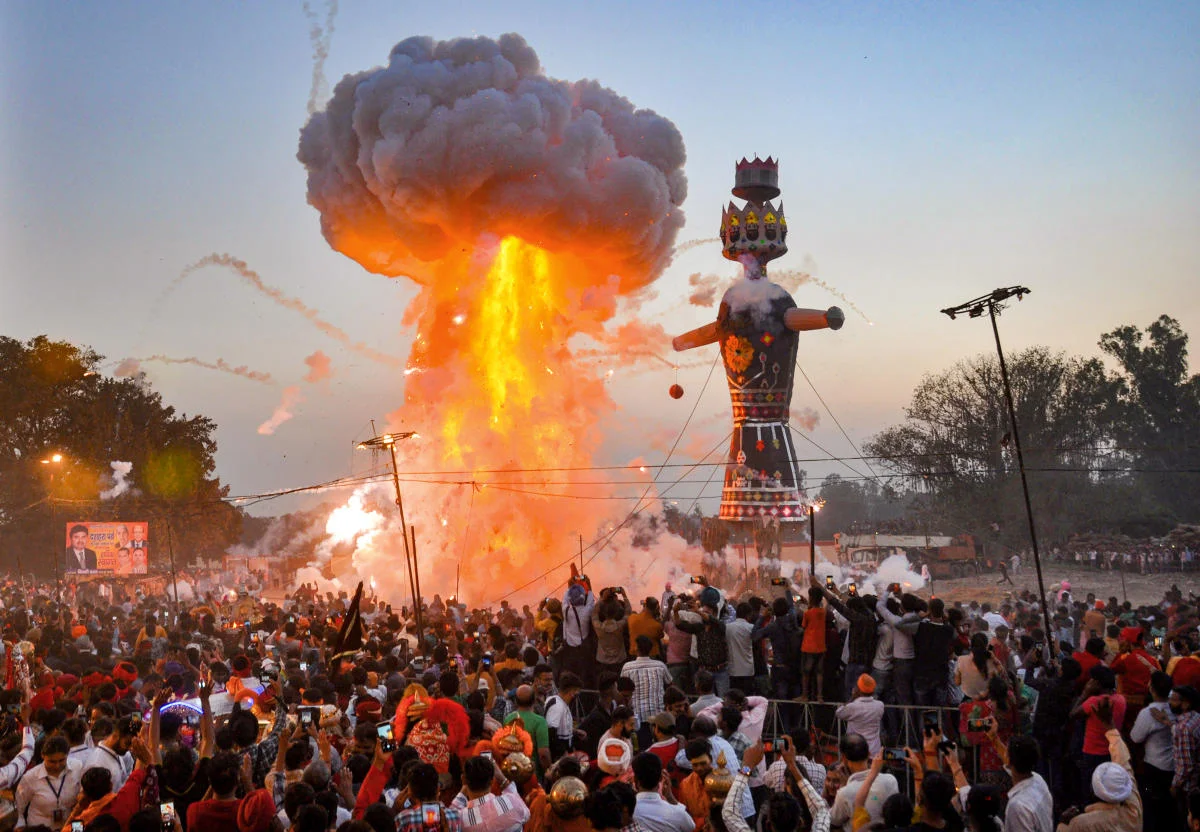
Dussehra, also known as Vijayadashami, is one of India's major Hindu festivals. Every year, people in many parts of the country burn giant effigies of Ravana to celebrate the victory of good over evil. The tradition, known as Ravan Dahan, is rooted in the story of Lord Rama's battle against Ravana in the Ramayana.
But why is Ravana's effigy burnt, and what does the ritual symbolise? Here is the story and significance behind this popular Dussehra tradition.
Grow Your Business with Janatha Mirror
Reach 50,000+ daily readers across Andhra & Telangana
The Story Behind Ravana Dahan
According to the Ramayana, Ravana was the powerful king of Lanka. He was known for his knowledge, strength and devotion to Lord Shiva. However, he abducted Sita, the wife of Lord Rama, leading to a great battle between Rama and Ravana.
With the help of Hanuman and the vanara army, Lord Rama fought Ravana to rescue Sita. The battle ended with Rama defeating Ravana, an event traditionally associated with the victory of righteousness over wrongdoing.
Dussehra commemorates this victory and reminds devotees of the importance of following the path of dharma, or righteousness.
Grow Your Business with Janatha Mirror
Reach 50,000+ daily readers across Andhra & Telangana
Why Is Ravana's Effigy Burnt?
Ravan Dahan is more than a dramatic retelling of a mythological event. It carries several moral and spiritual messages.
1. Victory of good over evil
The burning of Ravana's effigy symbolises the triumph of good over evil. Lord Rama's victory represents the belief that righteousness ultimately prevails over wrongdoing.
Grow Your Business with Janatha Mirror
Reach 50,000+ daily readers across Andhra & Telangana
2. The fall of arrogance
Despite his knowledge and power, Ravana's decisions led to his downfall. The story reminds people that pride and arrogance can destroy even the most powerful individuals.
3. Respect for justice and righteousness
Ravana's abduction of Sita is portrayed as an act of wrongdoing. His defeat highlights the importance of respecting others and standing against injustice.
4. Overcoming negative qualities
The ritual is also interpreted as a reminder to overcome negative traits such as anger, greed, jealousy, hatred and excessive pride in our own lives.
What Do Ravana's Ten Heads Symbolise?
Ravana is commonly depicted with ten heads, making his image one of the most recognisable symbols of Dussehra.
Different traditions interpret these heads in different ways. Some popular explanations associate them with negative human qualities, while others connect them with Ravana's extensive knowledge and abilities.
One commonly shared interpretation links the ten heads to traits such as lust, anger, greed, attachment, pride and jealousy. However, these explanations vary across traditions and should not be treated as a single, universally accepted interpretation from the Ramayana.
How Is Ravan Dahan Celebrated Across India?
In many parts of northern India, Dussehra celebrations include performances of Ramlila, which depict episodes from the Ramayana. The festivities often culminate in the burning of effigies representing Ravana, Kumbhakarna and Meghnad.
Large crowds gather to watch the ceremonies, which may include fireworks, cultural performances and community events.
In other parts of India, Dussehra is celebrated through different regional and religious traditions. The festival may focus on the worship of Goddess Durga, local deities or other customs associated with Vijayadashami.
These variations reflect India's rich cultural and religious diversity.
Was Ravana Only a Villain?
Although Ravana is portrayed as Lord Rama's adversary in the Ramayana, some traditions also describe him as a learned scholar, a skilled musician and a devoted follower of Lord Shiva.
Certain communities in India even honour Ravana through local religious customs and traditions. These practices reflect different regional interpretations of the epic and its characters.
Therefore, the symbolism of Ravan Dahan can also be understood as a reminder to reject harmful actions and qualities rather than simply condemning a character without considering the wider cultural context.
The tradition of burning Ravana's effigy on Dussehra is rooted in the Ramayana and symbolises the victory of righteousness over wrongdoing. It also carries lessons about humility, justice and the consequences of arrogance.
As families and communities celebrate Vijayadashami, the deeper message of Ravan Dahan is to recognise and overcome the negative qualities within ourselves. The festival encourages people to choose honesty, compassion and righteousness in their everyday lives.
💬 Reader Opinions & Discussion0
Login Required to Share Your Opinion
Only verified and logged-in readers can post opinions on Janatha Mirror news stories.