India’s Retail Inflation Rises to 5.54% in September as Food Prices Surge
India retail inflation September 2026
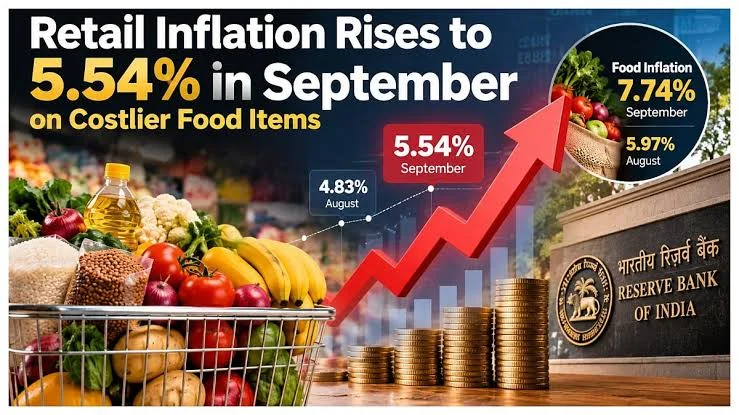
India’s retail inflation rose to 5.54% in September from 4.83% in August as food inflation climbed to 7.74%, driven by higher onion and vegetable prices.
New Delhi, October 13, 2026: India’s retail inflation rose to 5.54% in September 2026, up from 4.83% in August, driven mainly by higher food prices, according to provisional data released by the Ministry of Statistics and Programme Implementation (MoSPI).
The latest Consumer Price Index (CPI) reading was higher than economists’ expectations of 5.4%, according to a Reuters poll. Inflation has moved closer to the Reserve Bank of India’s upper tolerance limit of 6%, raising concerns about the cost of living and household spending.
Grow Your Business with Janatha Mirror
Reach 50,000+ daily readers across Andhra & Telangana
Food Inflation Climbs to 7.74%
Food prices remained the biggest contributor to rising inflation. Food inflation, measured by the Consumer Food Price Index, increased to 7.74% in September, compared with 5.97% in August.
Several essential food items recorded sharp price increases:
Onions: Inflation surged to 108.09%.
Grow Your Business with Janatha Mirror
Reach 50,000+ daily readers across Andhra & Telangana
Ginger: Prices increased by 62.85%.
Garlic: Prices rose by 54.62%.
Lemons: Prices increased by 36.41%.
Grow Your Business with Janatha Mirror
Reach 50,000+ daily readers across Andhra & Telangana
However, some vegetables became cheaper. Potato prices declined by 11.50% year-on-year, while tomato prices fell by 8.62%.
The sharp rise in prices of commonly used kitchen ingredients is likely to put additional pressure on household budgets.
Rural Inflation Higher Than Urban Inflation
Retail inflation remained higher in rural areas than in urban India during September.
Rural inflation increased to 6.08%, while urban inflation reached 4.88%. Food inflation stood at 8.06% in rural areas, compared with 7.18% in urban areas.
The figures indicate that rural households continued to face greater price pressures, particularly from essential food items.
Inflation Poses Challenge for RBI
The increase in retail inflation presents a challenge for the Reserve Bank of India (RBI), which aims to maintain price stability while supporting economic growth.
The RBI’s medium-term inflation target is 4%, with a tolerance range of 2% to 6%. The September reading places inflation closer to the upper end of this range.
Higher food prices, crude oil costs and currency movements could add to inflationary pressure by increasing transportation, production and import expenses.
According to Reuters, the RBI raised its benchmark repo rate by 25 basis points to 5.50% in its latest policy decision amid concerns about inflation. Future monetary policy decisions will depend partly on how inflation evolves in the coming months.
Impact on Households and the Economy
Rising retail inflation reduces consumers’ purchasing power, especially when the prices of essential goods increase faster than incomes. Lower-income households may be particularly affected because food accounts for a larger share of their spending.
Businesses may also face higher costs for raw materials, transport and other inputs. These increases could eventually feed into the prices of goods and services across the economy.
The coming months will be important in determining whether inflation begins to ease. Food supply conditions, agricultural output, weather patterns, global crude oil prices and currency movements will remain key factors to watch.
Source: Ministry of Statistics and Programme Implementation (MoSPI), Reuters.
💬 Reader Opinions & Discussion0
Login Required to Share Your Opinion
Only verified and logged-in readers can post opinions on Janatha Mirror news stories.